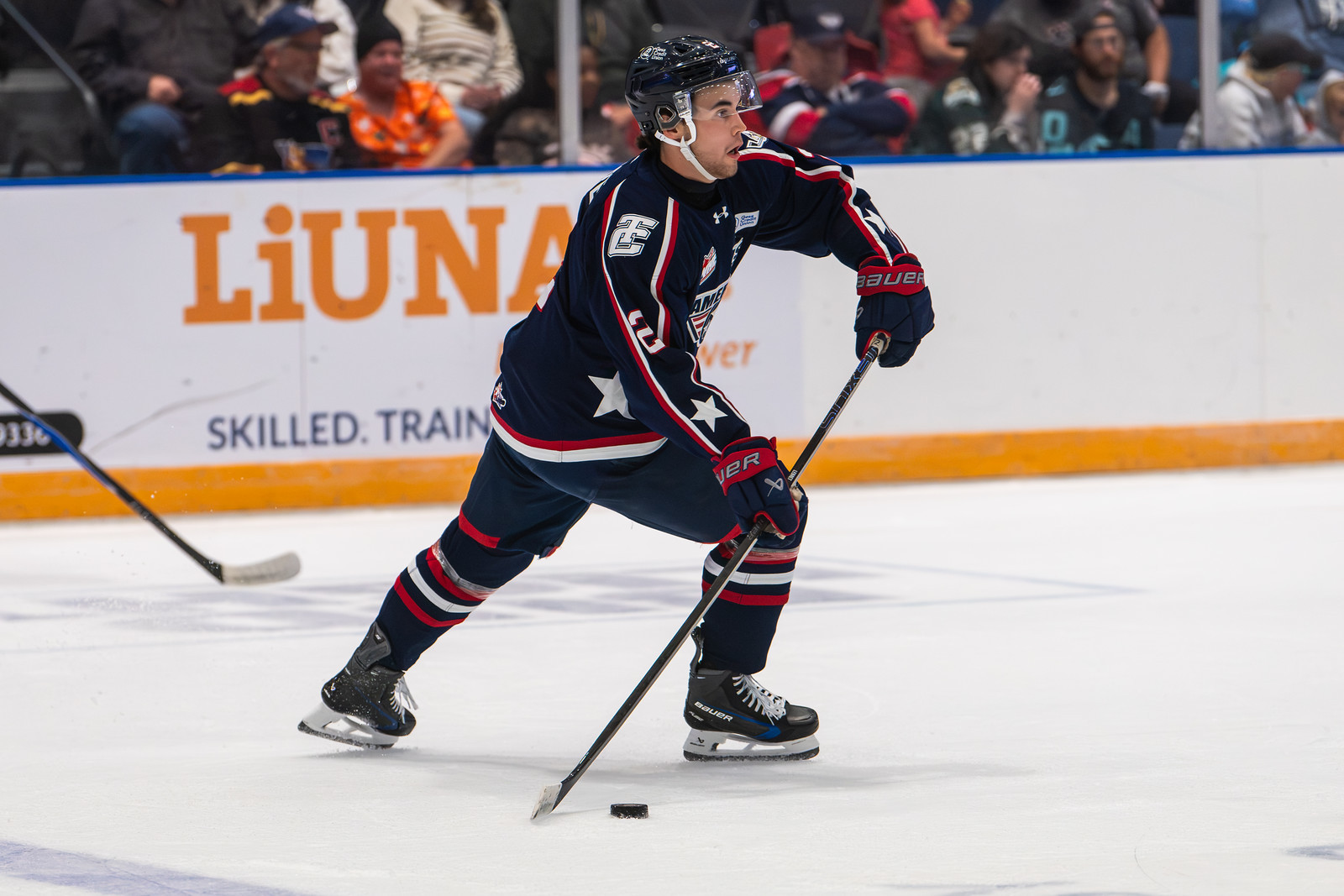
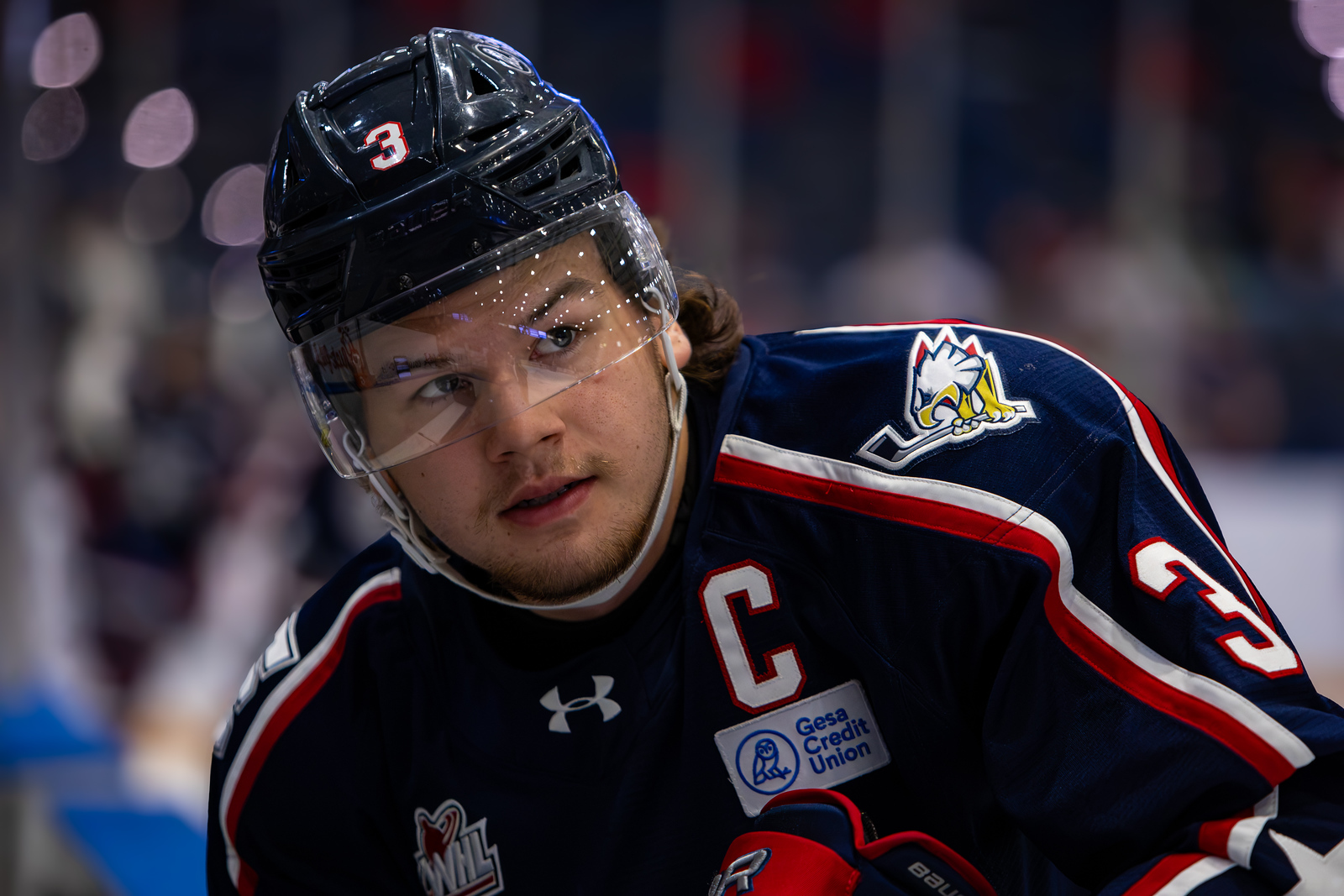
At long last, the review of the Tri-City Americans 2025/26 season has arrived. The 2025/26 campaign mirrored the 2024/25 season in many ways, featuring some positive highlights in the first half alongside a significant amount of unfortunate on-ice struggles in the second half. Although the team appeared to be comfortably coasting toward a playoff spot in January, their fortunes shifted rapidly. Following a disastrous second half, Tri-City finished with a 26-36-5-1 record, placing tenth in the Western Conference. As a result, they will select sixth overall in the upcoming WHL Bantam Draft.
Overview/What Went Wrong
Expectations were modest entering the season, as the roster featured 12 rookies for much of the year. The team had also lost a significant amount of top-tier talent from the previous season, including Max Curran, Jackson Smith, Austin Zemlak, Terrell Goldsmith, several aging-out players, and two-year starting goaltender Lukas Matecha. With new ownership, a fresh coaching staff, and a roster in transition, the organization was clearly in the midst of a rebuilding phase.
A leadership change at the top also played a role, as Stu Barnes stepped down after several years in charge. The organization promoted Associate Head Coach Jody Hull following an extensive interview process.
Early on, the team performed as expected: a young group under a new head coach, relying on strong goaltending and a collective effort rather than a single dominant line. However, things didn’t click right away, as the Tri-City Americans opened the season 1–5.
In November, though, the tide began to turn. Tri-City capitalized on a heavy home schedule, playing 10 of 11 games at home, and posted a strong 7–3–1 record. This included defeating the at the time undefeated Prince Albert Raiders, who are now actually playing in the WHL Championship.
The first half was defined by excellent goaltending. Rookie Xavier Wendt seized the starting role from returning netminder Ryan Grout and posted some of the best numbers in the WHL. Wendt also made history in December, recording the second goalie goal in franchise history during a 3–0 shutout against the Swift Current Broncos, joining Olaf Kolzig in that exclusive category.
By the winter break, the team appeared to be thriving under Hull’s system and was playing its best hockey. Notable moments included Gavin Garland’s dramatic last-second equalizer in Portland just after Christmas, followed by an overtime winner from overage forward Jake Gudelj, as well as a New Year’s Eve victory over their rivals, the Spokane Chiefs.
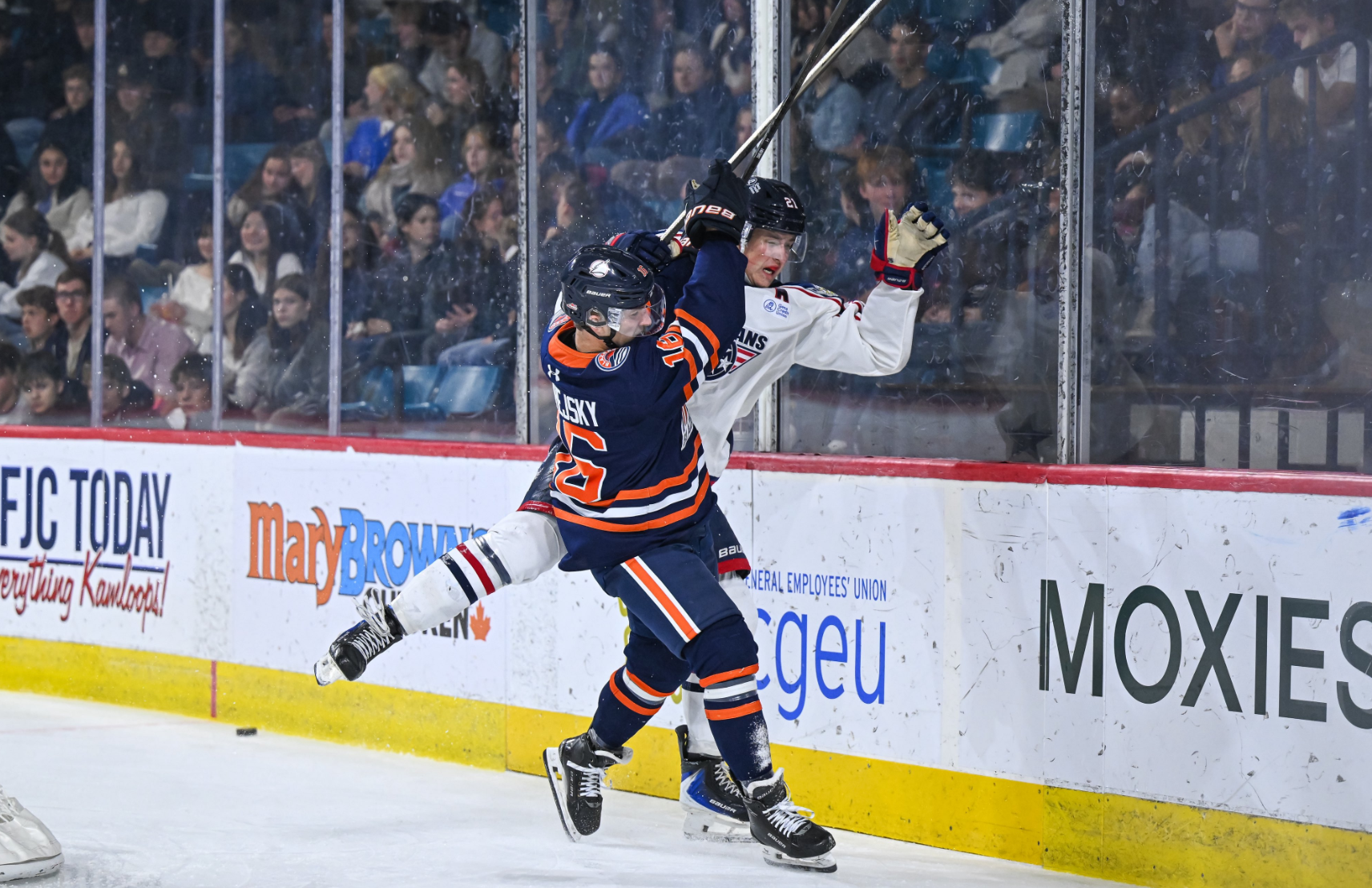
The season’s trajectory shifted in late January during a blowout loss to the Brandon Wheat Kings. In that game, Cash Koch, arguably the team’s most physical and energetic player, suffered a season-ending injury after being tripped by a referee and hitting his head on the ice during a fight. Without Koch’s presence, the team struggled, and it showed.
Tri-City regressed to its early-season form, consistently being outworked and outplayed. The power play faltered, and the goaltending tandem that had previously carried the team began to break down. In February, Tri-City set a franchise record for consecutive losses, failing to win a single game during the month. Following an overtime win on January 31, the team went a staggering 1–18–2 to close the season, the worst stretch in franchise history.
The situation worsened when long-time defenseman and alternate captain Carter Savage, in his fifth and final WHL season, suffered a brutal leg injury in late February. At that point, it genuinely felt as though the team had waved the white flag.
While the goaltending was elite in the first half, it was never going to sustain the team indefinitely. Tri-City struggled to generate offense all season, and it ultimately caught up to them when the goaltending could no longer bail them out. The team finished with just 181 goals, the second-fewest in the league.
Special teams were another major hurdle. The power play operated at just 16.9%, the third-worst in the WHL—a continuation of struggles that date back to the 2022–23 season, when the team saw a sharp drop-off from its previously elite production. Additionally, Tri-City frequently suffered from slow starts, often conceding the opening goal and playing from behind. During this stretch, they consistently looked a step behind, forced into a reactive style rather than dictating play as they had earlier in the year.
When you lose your most energetic player, along with the longest-tenured player in the room, two key locker-room presences, late in the season while already on a cold streak and battling for a playoff spot, it can take a serious mental toll. From my perspective, that’s exactly what happened to the Tri-City Americans. Over the final months, they didn’t appear to match the urgency of their opponents, regardless of who they were facing. As is often the case during a slump, they looked a step behind in nearly every facet of the game. This was a young team that was tested mentally and ultimately couldn’t overcome the adversity.
That said, this was likely more of a symptom than a root cause. Several underlying factors contributed. For one, this was a young roster that struggled to match the desperation of more experienced teams fighting for playoff positioning. Many of their 12 rookies had never faced that level of intensity. Fatigue likely played a role as well—this was the first full junior season for many players, and the physical and mental grind can wear a team down significantly.
On top of that, extended losing streaks can fracture team cohesion. Players may begin pressing individually rather than trusting the system, leading to further breakdowns. As a result, the structure and discipline within Hull’s system began to erode during games, compounding the team’s struggles.
Ultimately, these are all plausible explanations for Tri-City’s difficult finish. No one outside the room truly knows what was happening internally, but what is clear is that it was an incredibly challenging final two months for the organization on the ice.
Top Performers
Here’s a look at a few of the top players from Tri-City in 2025/26, some unexpected as well, that helped fuel the start that Tri-City had as a club.
Dylan LeBret
LeBret was mentioned earlier, but coming into the season, not much was widely known about him. The Tri-City Americans acquired his rights near the 2024–25 trade deadline after they were previously held by the Regina Pats, who selected him third overall in the 2022 U.S. Prospects Draft.
Before joining Tri-City, LeBret played at Shattuck-St. Mary’s, widely regarded as one of the premier prep hockey programs in the United States.
A local product from Mead, just outside Spokane, LeBret grew up around the Tri-City–Spokane rivalry and quickly became part of it in his rookie WHL season. He made an immediate impact, scoring in his debut on opening night against the Seattle Thunderbirds.
As the season progressed, LeBret earned increased responsibility and emerged as the team’s most consistent defenseman, frequently praised by coaches for his strong defensive play. The 18-year-old appeared in all 68 games, recording 19 points.
Looking ahead, LeBret is expected to return next season and could be one of the team’s top defensemen if he continues to build on his 2025–26 campaign. He is currently committed to the University of Maine for the 2027–28 season, though an earlier arrival remains a possibility.
Jakub Vanecek
Vanecek, another rookie defenseman, was Tri-City’s top selection in the most recent CHL Import Draft. The 17-year-old from Czechia delivered an outstanding first season in North America, quickly establishing himself as the team’s top import and one of its best defensemen alongside LeBret.
Projected as a second, or third-round pick in the upcoming NHL Draft, Vanecek proved his value all season long. One of his most notable moments came in early October that showcased what he would do for the rest of the year, was when Vanecek scored a late game-winning goal in Prince George that helped shift the team’s early-season momentum.
Vanecek excelled in key situations, particularly on the power play, where he led all Tri-City defensemen in both assists and overall production. In 59 games, he led all Americans defensemen with 35 points.
Strong in transition, poised with the puck, and reliable defensively, Vanecek also impressed internationally. He earned a spot on Czechia’s World Junior roster as its youngest player and later recorded five points in seven games at the U-18 World Championship, helping secure a bronze medal.
He is expected to return next season and anchor the top pairing, forming what could be one of the WHL’s more exciting defensive duos.
Savin Virk
Virk returned for his second season in Tri-City and established himself as the team’s premier goal scorer, leading the club with 27 goals.
After joining from the Chilliwack Chiefs the previous year, Virk has totaled 49 goals in 116 regular-season games. His ability to find soft areas in coverage, combined with a lethal shot, made him the go-to option when the team needed a goal.
Virk is committed to Michigan State University, and his future remains uncertain. Whether he returns next season or departs for college, his absence would leave a significant offensive gap that won’t be easy to replace as he is the teams best goal scorer.
Grady Martin
Martin, originally a second-round pick of the Prince Albert Raiders, completed his second season in Tri-City and had the most productive year of his WHL career as he had arguably the biggest breakout year of any Tri-City American forward.
Despite missing time early due to a hand injury, the 19-year-old made a major impact in the 50 games he played. He led the team in faceoff percentage at 55.2% and nearly tripled his previous season’s point total, finishing with 25 points after recording just nine the year prior.
At 6’3″, 205 pounds, Martin provides the size and physical presence the Americans value at center. His development this season likely solidified his place as an overage player moving forward.
One of his standout moments came on January 31, when he scored an overtime winner against Wenatchee, showcasing his ability to deliver in key situations.
Connor Dale
Sometimes a midseason pickup changes everything, and that was the case with Connor Dale.
Claimed off waivers from the Swift Current Broncos, Dale had already played for four WHL teams and entered the season with a career-high of 17 points.
However, he found immediate success in Tri-City, recording a remarkable 60-point season, second best on the team, after joining in early October. His speed and offensive instincts made him one of the most dangerous players on the ice, consistently generating high-quality scoring chances.
Dale’s breakout performance earned him a scholarship to Merrimack College, where he will continue his career. His offensive production will be difficult for the Americans to replace and was such an exciting player to watch with his speed as he was one of the quickest skaters out on the ice when he was out there.
Cruz Pavao
Pavao emerged as another key offensive contributor in his second full season with Tri-City. The former 13th overall pick in 2023 doubled his rookie goal total, finishing with 21 goals and 43 points in 64 games.
A natural goal scorer, Pavao possesses one of the best shots on the team, arguably second only to Virk, and thrives in mid-range scoring areas. His strong work ethic and improving two-way game add to his value as a forward.
Pavao’s standout performance this season came on trade deadline day, when he recorded four points in a 7–3 win over the Moose Jaw Warriors.
Projected as a potential late-round NHL pick, Pavao will be this team’s best goal scorer next season, especially if Virk does not return.
Xavier Wendt
Rounding out the top performers is none other then goaltender Xavier Wendt, who emerged as the team’s MVP in my opinion.
The 17-year-old joined Tri-City after a successful stint at Shattuck-St. Mary’s and helped Team USA capture gold at the Youth Olympic Games.
Wendt quickly took over the starting role, outperforming returning goaltender Ryan Grout and delivering exceptional performances in the first half of the season.
Despite standing at 6’1″, Wendt compensates with elite athleticism, strong positioning, and excellent puck tracking. His composure and hockey IQ make him appear far more experienced than a typical rookie at this level and at seventeen-years-old.
While his numbers dipped slightly in the second half due to a heavier workload and inconsistent team play, he still finished with a .905 save percentage, a 3.25 GAA, and a 18-20-3 record across 43 games.
Currently ranked 29th among North American goaltenders for the NHL Draft, Wendt remains a strong future prospect. If he returns next season and continues to develop, he has the potential to become one of the WHL’s premier goaltenders and just add to the long list of elite goaltenders to pass through Tri-City.
What’s got to improve for next season?
The Tri-City Americans have a few key areas they need to address before next September if they want to become a playoff team, which will certainly be doable with the number of returners they should have.
Improving their scoring is the most obvious priority. This could be addressed through a trade, potentially by adding a veteran forward. On paper, next year’s roster will likely remain very young and may lack a true high-end offensive driver out of the guaranteed players to return besides Cruz Pavao, who should be the team’s top scorer next season.
That said, making a move for a veteran forward may not align with the organization’s long-term plans. Tri-City is still in a rebuilding phase, and with an influx of young forward talent expected, the team may opt to stay the course rather than accelerate the timeline. Ultimately, that decision will fall to general manager Bob Tory.
Special teams, particularly the power play, are another area that must improve after the past few years have provided lackluster results.
Tri-City did not generate as many power-play opportunities as other teams, and early in the season, the unit actually showed some promise—arguably looking better than it did in 2024–25. However, as the season progressed and results failed to materialize, frustration appeared to set in. A prolonged drought in December was followed by another during the February losing streak, when the team went over 20 consecutive power plays without a goal.
Injecting fresh personnel into the unit could help, but internal development will be just as important. Jody Hull did give several younger players opportunities on the power play, and some of those names—such as Alexander Laing and Aden Bouchard—could take on much larger roles next season.
Getting defenseman Jakub Vanecek back will be significant, as he was the team’s most productive blue-liner on the power play. Additionally, Bouchard should see an expanded role as he continues to develop. A skilled two-way defenseman who gained confidence as the 2025–26 season progressed, he is a strong candidate to take on greater responsibility at the blue line.
With another year of experience, players like Vanecek and Bouchard, along with forward Cruz Pavao, could help stabilize the unit and make the power play more consistent and effective overall from the 16.9% that it was in 2025/26.
Future Americans
Here’s a look at just a few notable players that have a good chance at making it to the roster full-time next season and make a impact.
Ben Oliverio
Tri-City fans have plenty of reason to be excited about Ben Oliverio, the ninth overall selection in the 2025 WHL Draft by the Tri-City Americans.
Oliverio is set to join the team as a rookie next season and projects as an ideal fit for Tri-City’s identity. He is a high-compete forward who brings energy every shift, and consistently gives maximum effort. His style if you had to give an example of a current Americans player, is comparable to current Americans forward Cash Koch, as both players thrive on intensity and competitiveness.
During the 2025–26 season, Oliverio played for the Calgary Northstars U18 squad, where he recorded 47 points in 36 games. He also racked up an impressive 114 penalty minutes—the second-highest total in the AEHL U18 that season—highlighting his physical edge.
Oliverio appeared in three preseason games with Tri-City but did not register a point. Still, he is expected to step in and make an immediate impact next season, particularly if key forwards like Gavin Garland and Savin Virk do not return.
Justin Moon
Justin Moon may prove to be a steal for Tri-City, as Tri-City selected him in the sixth round. Moon is already trending toward earning a roster spot next season.
Moon stood out during training camp, performing well enough to make the preseason roster as one of only four players born in 2010 to do so. While he appeared in just one preseason game and did not record a point, his potential was evident.
He spent the 2025–26 season with the Burnaby Winter Club at the CSSHL U18 level, where he posted 36 points in 27 games. Moon also impressed at the WHL Cup, scoring five goals in five games.
Fans can expect an exciting, skilled forward with strong puck-handling ability and a willingness to battle along the boards. If he carries over the pace and creativity he showed in camp, Moon has a strong chance to crack the opening-night roster.
Lukasz McIsaac
Lukasz McIsaac, brother of Will McIsaac of the Spokane Chiefs, is expected to join Tri-City full-time next season after appearing in four games with the club in 2025–26.
A third-round pick in 2024, McIsaac spent most of the season with Calgary IHA at the U18 level, recording seven points in 23 games. He also gained experience at a higher level with a stint for the Calgary Canucks in the AJHL.
McIsaac is known as a hard-working, physical defenseman who plays a reliable, no-nonsense game. With the departure of Charlie Elick, a prospect of the Columbus Blue Jackets, there is a clear opportunity for McIsaac to make the team.
Potential Breakouts for 2026/27
Projecting breakout players is never an exact science. Development isn’t always linear, some players take major steps forward, while others face setbacks due to injuries, role changes, or limited opportunities. Nothing is guaranteed.
That said, the following young players below have the potential to take significant steps forward and make a bigger impact for the Tri-City Americans next season if everything breaks right this offseason.
Aden Bouchard
Bouchard should be near the top of this list if he can bounce back and build off his rookie season.
Bouchard, the third overall selection in the 2024 WHL Prospects Draft, had a rookie campaign that left much to be desired. But his upside remains undeniable. Bouchard’s WHL career got off to a slow start as he adjusted to the league’s pace and physicality and speed a bit slower than some of his counterparts did who were also selected in the first round.
As the season progressed, however, Bouchard began to settle in and gain confidence. By the second half, he started to resemble the high-end prospect the Tri-City Americans envisioned when they selected him. His game became more complete, and he found ways to contribute at both ends of the ice.
Of his five points on the season, four came in the second half, an encouraging sign of growing comfort at the WHL level.
If Bouchard can continue to mature, particularly from a mental standpoint, and build on that late-season momentum and have a good summer, he is well-positioned for a breakout campaign as a 17-year-old. He has the potential to emerge as one of American’s most improved players next season, but at this level, everything is earned, not given.
Alexander Laing
Laing is a bit of a sleeper pick for a breakout next season.
The young forward appeared in 54 games for the Tri-City Americans, primarily competing for ice time in the bottom six alongside other young players and import forwards. He finished the season with nine points, including six goals. Notably, two of those goals came on the power play, where he began to earn more opportunities as the season progressed.
Laing is an offensively inclined player with a natural scoring touch. While his defensive game still needs development—as is typical for young forwards—his ability to find the back of the net clearly earned the trust of the coaching staff, particularly in man-advantage situations.
Looking ahead, Laing has the potential to take a significant step forward. If he continues to develop over the offseason and earns increased ice time, it’s realistic to expect him to potentially double his goal total. As a 17-year-old next season, he could emerge as a reliable secondary scoring option for Tri-City.
Crew Martinson
Crew Martinson, the 24th overall selection in the 2024 WHL Bantam Draft, is one of the most likely breakout candidates for the Tri-City Americans next season. The 16-year-old put together a strong rookie campaign, though it was limited by injuries, appearing in just 43 of a possible 68 games.
Despite that, Martinson made a clear impact, recording 23 points, leading all rookie forwards on the team.
As he enters his sophomore season, Martinson should play with greater confidence and comfort, and with an expected increase in ice time and responsibility, he projects as an exciting player to watch in 2026–27.
Outlook
The Tri-City American’s outlook for next season largely depends on who returns and who opts to leave for the NCAA, it’s as simple as that. If key players such as Dylan LeBret, Xavier Wendt, Ryan Grout, Savin Virk, and Gavin Garland all return, Tri-City would have a strong case to be a top five team in the West. With incoming forward talent expected to join the roster, combined with returning players who now have a full WHL season under their belts, the team should see an increase in offensive production. Paired with high-end goaltending from Wendt and Grout, a stable coaching staff, and solid defensive depth, the foundation is there for the team to take a meaningful step forward.
But that is the best possible outcome for Tri-City.
Defensively, Tri-City is expected to lose Charlie Elick, but should return a strong core that includes Aden Bouchard, the third overall pick in the 2024 WHL Bantam Draft, along with Jaxen Adam, Dylan LeBret, Jakub Vanecek, and David Byrne. While losing Elick is significant, the overall depth on the blue line suggests the team should be able to absorb that loss.
In net, 2010-born goaltender Karter Gibson has signed with the team, providing additional depth. Even if Tri-City were to lose one of its current goaltenders to the NCAA, the team would still have a legitimate top-end WHL starter in either Wendt or Grout.
Ultimately, Tri-City’s ability to make a playoff push hinges on roster retention. If key players return, the path is clear. If not, the outlook shifts significantly. As a result, it’s difficult to project the team with certainty until closer to training camp and see who has left and who has decided to stay.
One factor working in Tri-City’s favor is the upcoming WHL Bantam Draft, where the team is scheduled to make four selections in the first two rounds, including two first-round picks. This gives the organization a strong opportunity to really load up for the next few years and add a couple of scoring pieces.
It should be, realistically, a rather quiet summer. Even in a best-case scenario where you get your top scorers back from this season, Tri-City will likely remain a relatively young team, and another rebuild year is a realistic outcome given the expected influx of new talent that is set to compete for the forward openings on the team. A conservative approach, making minimal roster changes and allowing the current core to grow together, would be a reasonable path forward as the organization continues the rebuild.
Rather than giving up picks and prospects for a team that is not ready for a WHL Championship run next season, it’s best to play it safe and ride with what you have, and there is a lot to like about some of these 2010-born players.
On paper, the Tri-City Americans have the pieces if the rookies come back on top of the young talent joining them, to possibly compete for a playoff spot, backed by strong goaltending and what should be a solid returning core, one that will be a motivated bunch to avoid a repeat of last season’s finish. But in junior hockey, nothing is guaranteed, and anything can happen.
Discover more from A51
Subscribe to get the latest posts sent to your email.